
blog
What Is Transactional Email? Architecture, Examples, and Delivery Rules
Learn what transactional email is, how it differs from marketing email, and which architecture, delivery, and testing rules keep product-critical messages reliable.
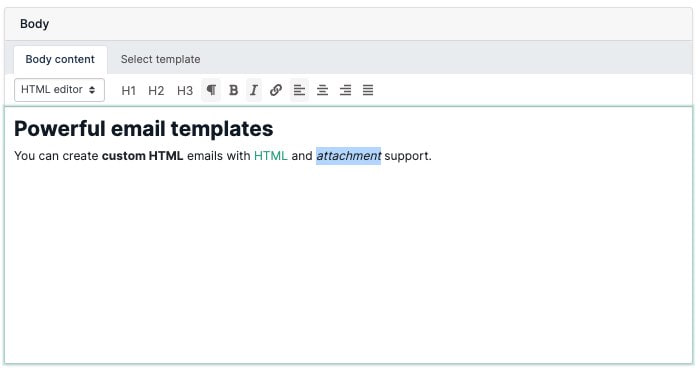
Transactional email is event-driven email sent because a user or system action happened. It is usually one-to-one, time-sensitive, and tied directly to completing or confirming a workflow.
If you are searching for transactional email or what is transactional email, the core distinction is simple: transactional messages exist to help a user finish something important, not to run a campaign.
Quick answer
Transactional email includes messages such as:
- signup verification
- password reset
- invoice and receipt delivery
- security alerts
- order and status notifications
These messages should be designed and operated differently from newsletters and promotional campaigns.
Transactional email vs marketing email
| Dimension | Transactional email | Marketing email |
|---|---|---|
| Trigger | User or system event | Planned campaign |
| Audience | Usually one recipient | Segment or list |
| Goal | Complete a workflow | Drive awareness or conversion |
| Tolerance for delay | Low | Moderate |
| Reliability expectations | High | High, but different impact profile |
The main operational mistake teams make is treating both categories as one delivery stream with one set of rules.
Common transactional email events
Typical categories include:
Account lifecycle
- verify email address
- reset password
- confirm email changes
- notify users about security actions
Billing and commerce
- purchase confirmation
- invoice issued
- payment succeeded or failed
- subscription renewal or cancellation
Product workflows
- invites accepted
- exports completed
- integrations connected
- background jobs finished
Each event should have a named owner, template logic, and fallback behavior.
Architecture pattern for reliable transactional mail
A healthy transactional system usually looks like this:
- App emits a business event.
- Event is queued or handled by a worker.
- Template is rendered with structured data.
- Message is sent through SMTP or API.
- Delivery and failure events are recorded.
This matters because user-facing workflows should not depend on a brittle synchronous send path whenever reliability can be improved through controlled event handling.
SMTP vs API for transactional email
Both models can work.
SMTP
Useful when:
- your stack already depends on SMTP libraries
- portability matters
- provider simplicity matters more than rich telemetry
API
Useful when:
- you want structured payloads and metadata
- you need clearer request-level error handling
- you want tighter control over queues and event correlation
For the API-driven version, use Transactional Email API.
Delivery rules that matter
Transactional mail should follow stricter operational rules than general campaign traffic.
Recommended baseline:
- separate critical transactional streams from promotional traffic
- keep sender identity and auth records healthy
- define retry behavior explicitly
- capture bounces, complaints, and delivery delays
- gate important template and sender changes before release
If a password reset email arrives late or lands in spam, the workflow is broken even if the provider technically accepted the message.
Testing transactional email before release
You should prove:
- the event triggers the correct template
- the right recipient receives it
- links, OTP codes, and attachments work
- headers and auth are healthy
- failure paths behave as designed
This is where MailSlurp adds the most control:
Anti-patterns to avoid
Mixing transactional and marketing sender posture
High-volume campaign traffic can create risk for critical workflow messages.
Treating email send success as workflow success
Application logs showing "sent" are not the same as proving the user received the message in a usable place.
Changing templates without release checks
Small template edits can create auth, rendering, or spam-filter issues that are hard to diagnose after launch.
Ignoring delivery telemetry
Teams that do not monitor bounces, latency, and complaint signals are blind during incidents.
Who should own transactional email?
Usually not marketing alone and not infrastructure alone.
The best ownership model is shared:
- product owns workflow intent
- engineering owns delivery and reliability
- operations or platform owners monitor sender health
That keeps responsibility aligned with the user impact of these messages.
Use MailSlurp for transactional email testing
MailSlurp gives teams proof for transactional email, not just sends. Teams use Email sandbox to isolate flows, Email integration testing to assert message behavior in CI, and Email deliverability test before release. Create a free account at app.mailslurp.com to start testing those paths.
FAQ
What counts as transactional email?
Event-driven messages such as resets, receipts, alerts, and verifications that exist to support a user or system workflow.
Is transactional email different from marketing email?
Yes. It is triggered by an event, usually one-to-one, and more tightly tied to product reliability.
Should transactional email use SMTP or API?
Either can work. The right choice depends on observability, integration, and control needs.
Why does deliverability matter more for transactional email?
Because these messages often complete critical product or billing workflows. Delay or misplacement has immediate user impact.
Final take
Transactional email is part of the product path, not just a message format. Teams that model it as a reliability system with explicit sender, delivery, and testing controls create better user outcomes and fewer support failures.